“Somebody should have done that” is an expensive sentence. It usually means the work was known about and nobody owned it.
The task module lives in Workflow Panel and is reached with the same login as the rest of Corporate Panel.
Owner and date
Every task has a title, a description, one or more assignees, a deadline and a status: not started, in progress or completed.
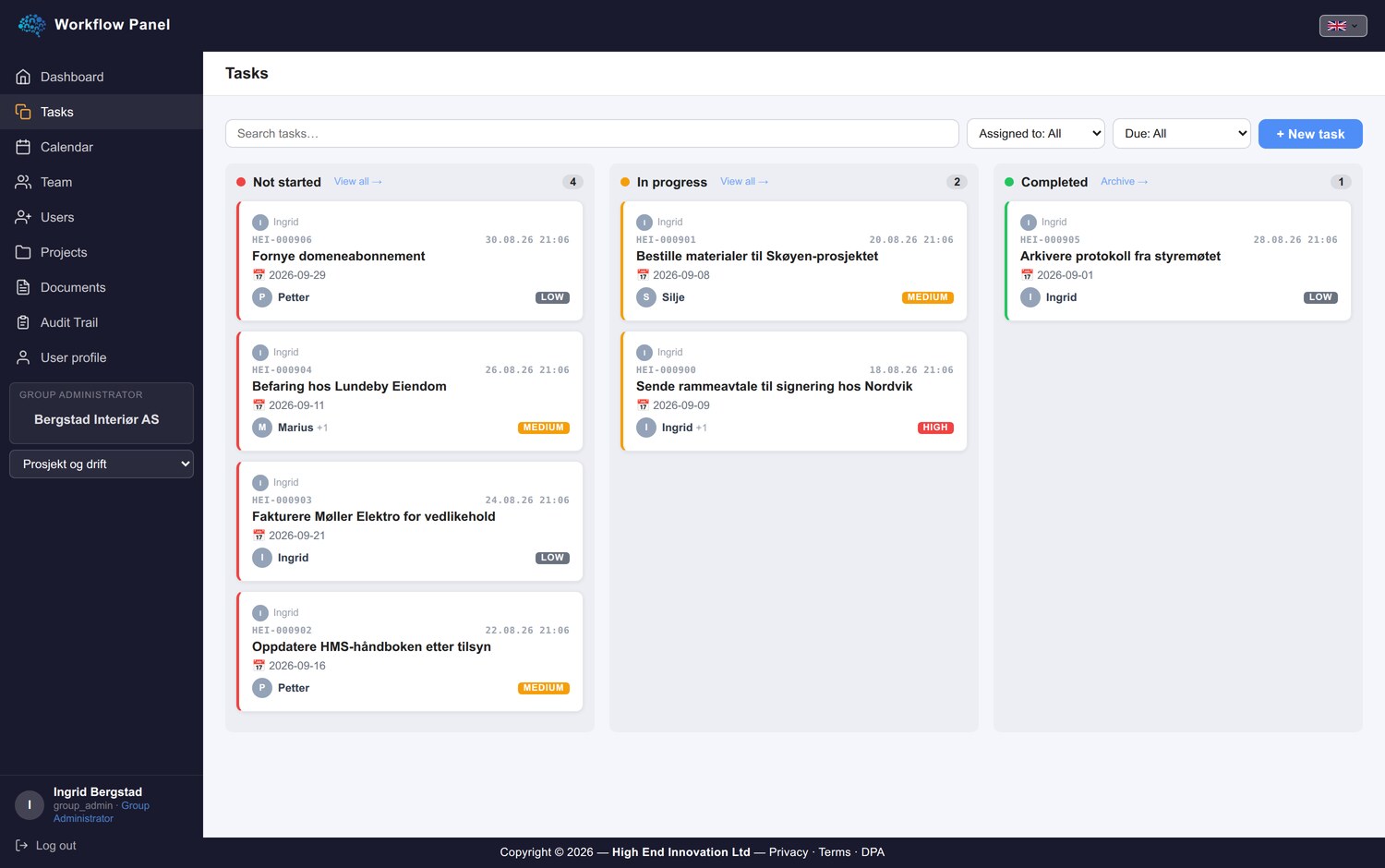
Three statuses hold up in practice. With eleven, half go unused and people disagree about what they mean.
A task also carries a severity, low, medium or high, and a category. Severity describes how much is at stake if something goes wrong, which makes it something other than a priority queue.
Every task gets an ID, giving everyone something unambiguous to reference in an email, a conversation or a meeting.
History
Changes are logged. You see who changed the status, when it happened, and what was commented along the way.
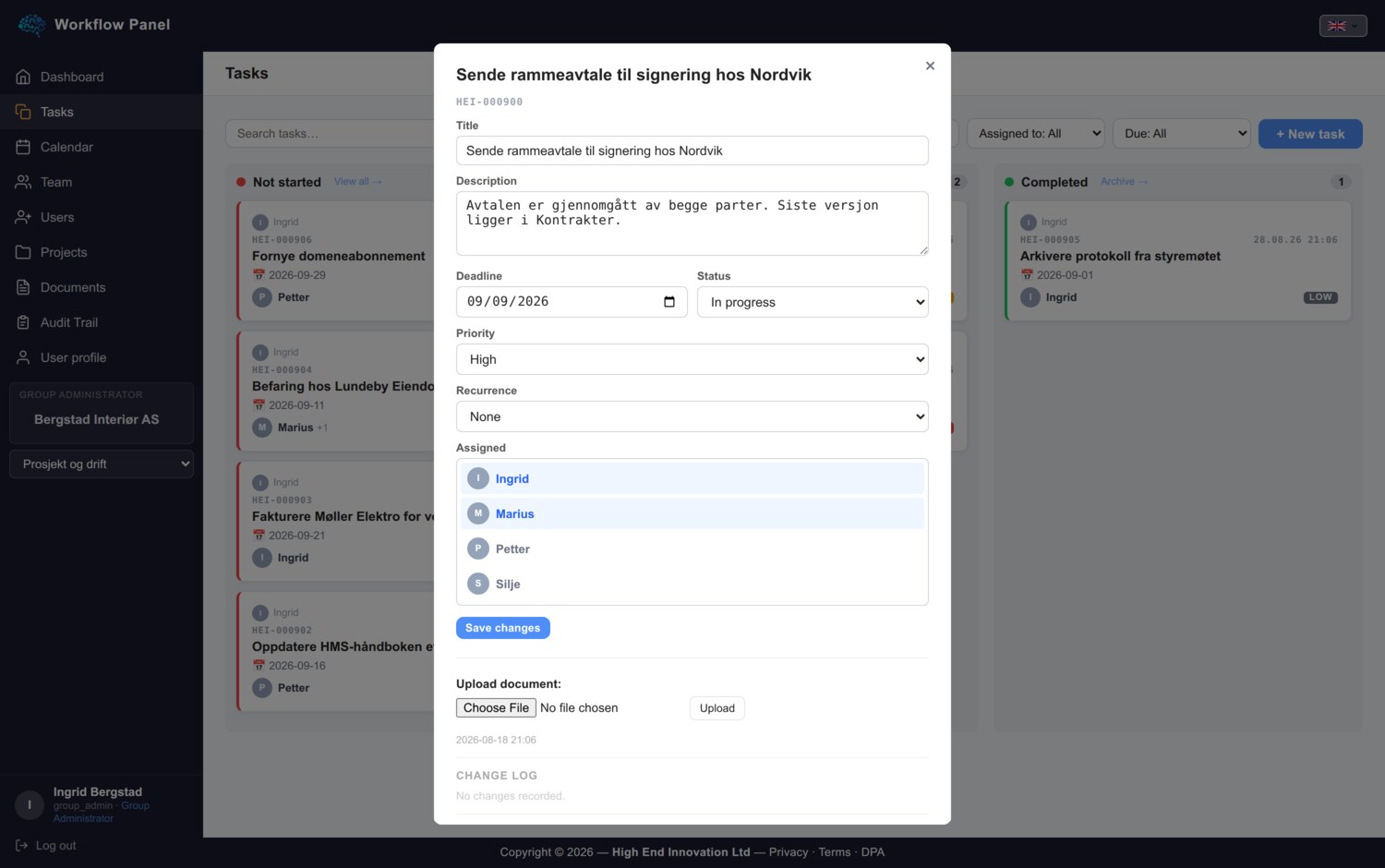
Next time the same work comes round, somebody can read how it was handled rather than guess.
Recurring tasks
Work that comes back can be set to repeat daily, weekly, monthly or yearly.
The monthly report, the backup check, the renewal falling due in March. Predictable tasks are often the first to slip, precisely because nobody thinks about them.
Approval
A task can require approval before it starts, sitting pending until someone approves or rejects it with a reason.
That helps for work costing money, touching production or going out to customers, and the module leaves everything else alone.
The connection to the rest
A task can carry a document, so the contract sits on the task about the contract.
It can belong to a project with its own members, so larger bodies of work can be followed together.
It can be referenced in chat, so the conversation about the work points at the work.
And it can be created, updated and commented on by an agent. An agent that notices something can file it directly, with context, rather than writing it in a message somebody has to read and act on.
Notification
Overdue tasks are emailed to the assignee in that person’s own language. English, Norwegian or Swahili, chosen from what is recorded on the user.
The notice goes out once per task per person per day. Ten reminders about the same thing teach people to ignore notifications.
What it gives you
Fewer cases falling between chairs, a shared understanding of what is in progress, and a history that turns “what happened with that case” into a lookup.
Next: chat.